Loading
Loading
The council's money · 2026
Every entry, counted by the site. Names are kept by FIAL; proof shows when FIAL shares it.
Spent 0% (₱0.00)Left (₱208,007.00)
Nothing spent this year yet.
Know your rights
The rules every PUP and CCIS student, and the council itself, work under. Open them anytime. When one is revised, the new one takes its place here.
PUP Student Handbook, 2019 Revised Edition
PDF, 94 pages, 1.6 MB
Students' rights, the rules and code of conduct, academic rules, student services, and how to file a complaint.
Internal Rules and Governance of the PUP CCIS Student Council (2024)
PDF, 13 pages, 153 KB
The council's own rules. Still the official document, but being revised: parts of it, like its list of committees, are out of date.
No record of this kind yet.
Financial disclosure is a standing commitment of this council. If a record is missing, ask the Secretary General through the help desk.
Ask the help desk
The 2026 ANAK PUP Constitution
PDF, 8 pages, 189 KB
The federation of all student councils in the PUP System. Its President sits on the Board of Regents as the Student Regent.
The Constitution of the PUP Student Council (2013)
PDF, 9 pages, 605 KB
Ratified on 19 January 2013. The university's student council system, from the classroom to the Sentral na Konseho ng Mag-aaral, the students' bill of rights, and the rules every college council works under.
The council's GSPOA programs, under their headings, and how far each has come.
0 of 39 programs done in A.Y. 2025 to 2026.
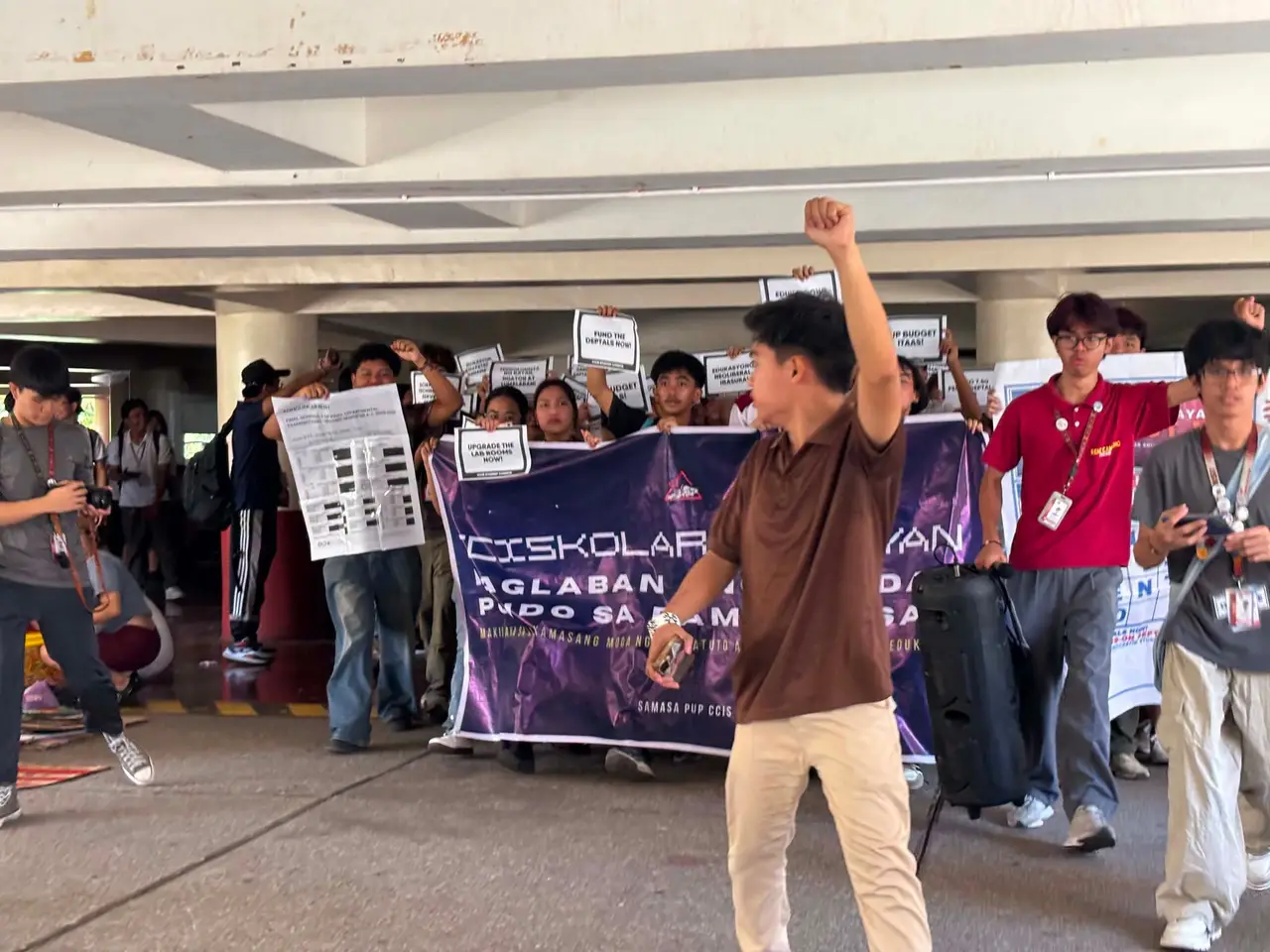
Pushes for pro-student policies that uphold academic freedom, prevent militarization in academic affairs, and protect student activists from state attacks, by engaging college and university administrators, other student leaders and national policymakers to institutionalize safeguards for students' rights.
More open forums, solidarity talks and teach-ins, so every CCISkolar learns to apply scientific and technological knowledge to the issues facing the university and the nation, in a space safe from any form of repression.
A student-led campaign for a clear, binding charter of the rights, responsibilities and entitlements of every CCIS student, answering academic repression, unclear processes for documents, a lack of transparency and limited student participation in decisions.
Solidarity with other colleges' issues (I-Tech, CAF, CE and others): joint consultations, lobbying and mobilizations, statements of support, educational discussions and coordinated actions on shared problems such as a lack of laboratories, equipment, classrooms, materials and professors.
An inventory of every laboratory, classroom and space in the college, requested from the Laboratory Head and the CCIS Administration: conditions, key equipment such as working computers, and maximum capacity, shared with students, including on the OneCCISko website. Includes an orientation on booking spaces, and a formal request for a dedicated organizational space for the council.
Lobbying the CCIS Administration to reduce the departmental examination fee, as other colleges have subsidized or waived theirs, and to publish the approved fee well before the exam, for transparency on how student funds are used.
Re-establishing the Rise For Education (R4E) PUP CCIS chapter, an ally of the Rise For Education PUP movement, against the underfunding of PUP. As stated in the GSPOA: the FY 2026 National Expenditure Program allocates only P3.6 billion against the P12.7 billion the university community requires.
The Formations, Assemblies, Organizations, and Publications (FAOP) Assembly brings together every voice of leadership in CCIS, from organizations to publications, to align visions, share campaigns and strengthen solidarity.
Year-level and departmental leaders as a platform for consultation, representation and coordination, so every CCISkolar is heard.
Open consultation hours and monthly progress reports; Junior and Senior Council Officers (JCO, SCO) admitted into the office, and ad hoc committees and units formed for urgent matters, for a faster response to students' concerns.
Educational discussions, workshops, mentoring and skill-building sessions on communication, public speaking, project planning, student rights and community organizing.
With MMAC: review materials for each course on OneCCISko, made by volunteers, never using professors' own materials except as references.
Consultations on academic concerns: departmental examination consultations before and after the exam (1st to 3rd year), thesis and capstone (3rd year), and on-the-job training (4th year).
Monitoring the ladderized examinations of PUP Institute of Technology students for transparency, with the PUP ITECH Student Council, as they transition into CCIS.
The relaunched local R4E chapter, with faculty, publications and organizations: town hall consultations, a PUP situationer with a budget discussion, student rights discussions, petitions and lobbying, and sensing forms.
A Students' Rights and Welfare Code for CCIS covering academic freedom, quality education, student workers, the LGBTQIA+ community and PWDs, with the CCIS Interlinked Grievance Form and CCISKOcheck, a monthly consultation with section or block representatives.
Strengthening efforts against the intrusion of state forces in the university by enforcing a ban and exposing any violations of human rights.
Continuing the previous term's work on a comprehensive SOGIE Student Council Code in CCIS, protecting women and people of diverse SOGIE from violence and abuse.
The council's overall inventory of its works, confidential or public, as a catalog that keeps every accomplishment and task for traceability and future use.
A clear record of all the council's tasks and duties: a schedule and a to-do list of assigned tasks.
With MMAC through OneCCISko: standardized templates such as excuse, request and authorization letters.
Public resolutions, memorandums and other records on the council's website, kept updated and sorted through the term.
Step-by-step guides to university documents and transactions, with short descriptions of PUP offices so students know where to go.
A database of contacts for the council: CCIS faculty, the Central Council, the Student Regent, other colleges' student councils and outside universities.
With the formations, assemblies, organizations and publications (FAOP): an inaugural FAOP assembly with a memorandum of agreement, monthly consultations, and a central contact database.
Avenues for students to engage with the real struggles of the people while strengthening campaigns and shared goals.
A progressive alternative to the current curriculum: how the country's system works, why alternative politics matter, and how Computer Science and IT can serve society.
Social investigations and class analysis of the CCIS community, used to build campaigns that answer students' needs.
Every package, donation and sponsorship documented, tracked and used as intended: an inventory log, proper allocation, recognition of partners, and follow-up reports to students.
Quarterly reports of council funds and project expenses, online and simply broken down, with impact reporting and a way for students to ask about them.
Monitoring and explaining the university's and the national budget for education, so students can campaign for better funding.
A one-time orientation for FAOP on filing requests and handling fees.
With Rise for Education: campaigns and exhibits on PUP's annual budget and the call to #PUPBudgetItaas.
A central hub for CCISkolars: a feedback page, a council page with its structure, announcements and updates, a resources page, and a calendar page, kept up to date by MMAC.
A semestral accomplishment report on the council's social media: highlights, a budget breakdown where it applies, and students' own stories.
The council's social media and urgent communication: ready templates for suspensions and emergencies, a student spotlight, and interactive content with safety reminders.
Quarterly review sessions with CCIS organizations to prepare for examinations and the administration's pointers.
Students build programs that answer real social issues facing the country.
Awards recognizing CCISkolars' achievements in the academic year.
Transparency
Resolutions, minutes, financial reports, and governing documents belong to the public record. This is where the council keeps them visible.